Want to know what makes our packages unique?
Our history
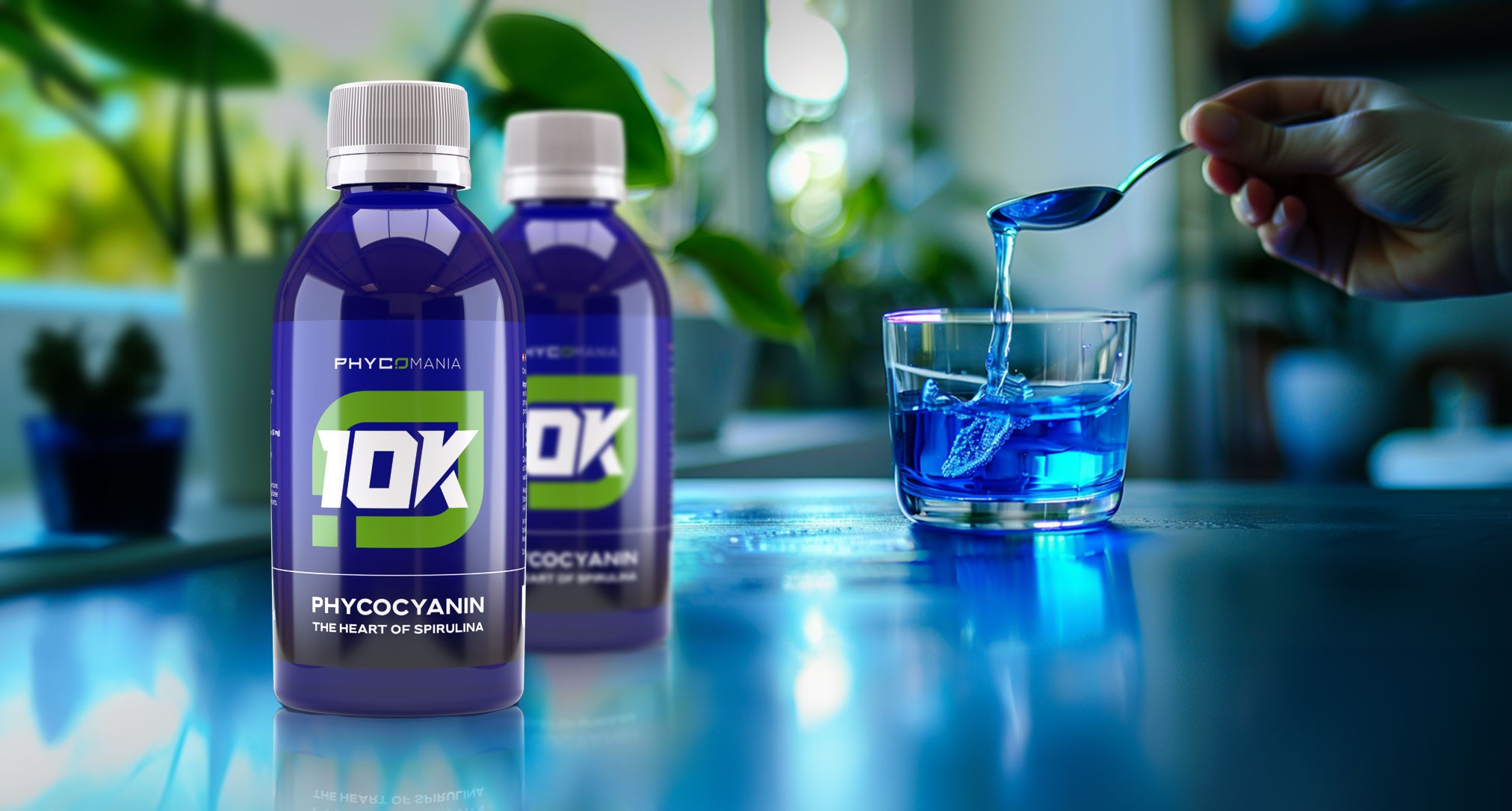
At PHYCOMANIA, we strive for excellence; our deep understanding of this “Blue Gold” and its valuable potential compels us to maintain the highest standards at every stage of extraction and stabilization, right through to packaging, storage, and delivery… To offer an exceptional product.
Phycocyanin is a powerful solar energy catalyst found in cyanobacteria, bacteria known for their blue-green color. For several years, this blue pigment has attracted increasing interest due to its numerous health benefits. To optimally enjoy its benefits, it is important that this protein is extracted under strict conditions that preserve its natural characteristics. Packaging and storage are also important factors that ensure quality phycocyanin. At PHYCOMANIA, all these aspects of phycocyanin production are taken into account to offer food supplements of exceptional quality.
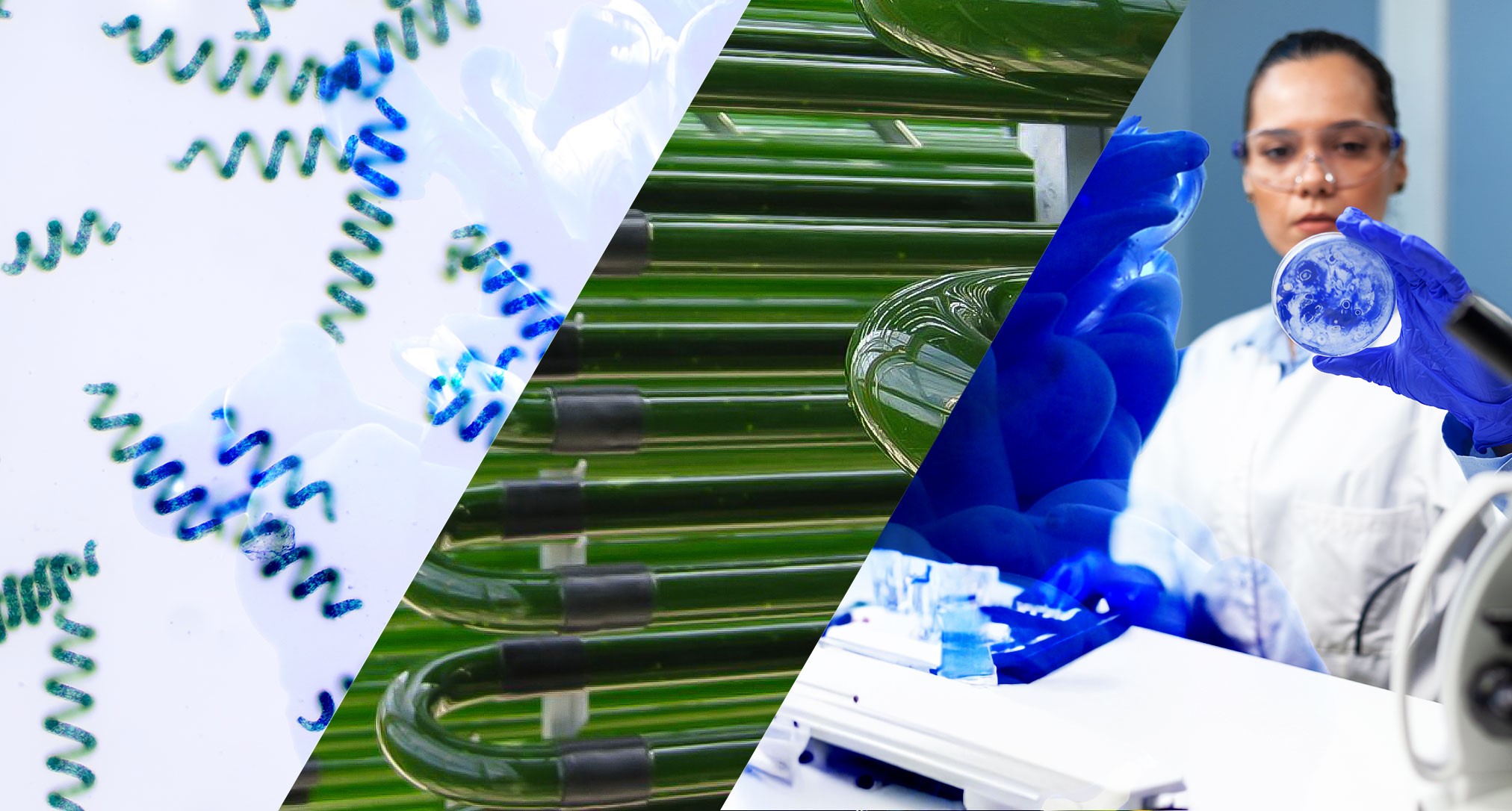
Phycocyanin is a protein that primarily appears in water within the cytoplasmic core of cyanobacteria. These blue-green algae represent one of the oldest life forms on planet Earth, dating back over 3 billion years. Within these microalgae, phycocyanin plays an important role in the photosynthesis process. Indeed, the function of phycocyanin within cyanobacteria is to absorb sunlight and convert it into a source of chemical energy readily usable by the algae.
For human health, phycocyanin is renowned for its antioxidant and anti-inflammatory properties. It also possesses an immunostimulant power that strengthens the immune system, making it a valuable asset for maintaining good health. To fully benefit from the phycocyanin present in spirulina, ideally, it should be consumed freshly harvested. However, most spirulina currently available for sale is subjected to high temperatures (over 30°C) during the drying process to offer dried spirulina. The drying of Phycocyanin leads to a modification of its structure and causes it to lose its beneficial health properties.
To best enjoy the benefits of phycocyanin, it is therefore essential to extract it from fresh cyanobacteria, such as Arthrospira platensis, while ensuring its structure is not altered during extraction. As phycocyanin is water-bound in its native form, it is important to note that not all extraction methods are equal, and it is crucial to understand the different techniques used to choose the best phycocyanin and benefit from its many advantages.
In laboratories, several techniques have been developed to obtain phycocyanin extracts used in research, as well as in the production of food supplements. Some extraction methods yield a significant amount, but the phycocyanin produced this way is altered. It is important to understand how these extraction techniques work and their impact on phycocyanin quality. Among the recognized and commonly used extraction methods today, only those performed using Fresh Spirulina should be considered to meet our standard: experiencing the daily vitality that Phycocyanin provides. Here are the existing techniques; which one appeals to you first?
The chemical solvent extraction technique, as its name suggests, uses chemical solvents to extract phycocyanin from cyanobacteria. Among the solvents used are formic, phosphoric, hydrochloric, and acetic acids, combined with petroleum ether or ethanol. This technique is primarily employed because it offers a high yield and attractive extraction costs, but it is important to note that the solvents used present a questionable level of ecological toxicity. Furthermore, the chemical solvent technique hinders the natural qualities of phycocyanin, thereby altering its benefits.
This extraction method is based on the use of ultrasound to break the membranes of cells containing water-bound phycocyanin. These ultrasounds act by generating pressure waves to create small cavities in the cell membranes, thereby leading to the release of phycocyanin. Ultrasonic extraction is considered a mechanical extraction method and avoids the use of chemical solvents harmful to the environment. However, it is important to ensure that the use of ultrasound does not cause the temperature to rise above 30°C. Indeed, phycocyanin is a thermosensitive protein, meaning it is sensitive to high temperatures. Exposing phycocyanin to temperatures above 30°C would alter its structure and thus compromise its biological properties.
This extraction method is entirely natural and relies on creating rapid variations in the concentration of substances around the cells to induce osmotic shock. This shock will disrupt the functioning of the cyanobacteria, causing them to release the phycocyanin they contain. To produce quality phycocyanin, it is therefore important to find an operating procedure that favors rapid, cold extraction and allows the extracted phycocyanin to be filtered free of any residual cellular material.
The advantage of aqueous extraction is that it allows phycocyanin to be preserved in its native, water-bound form. Furthermore, this method does not require the use of other chemical processes. This extraction process therefore enables the production of quality phycocyanin that retains all its natural characteristics.
This extraction method is based on a freezing and thawing process of spirulina cells to release water-bound phycocyanin. When cells are subjected to repeated freezing and thawing cycles, their cell membranes naturally burst, releasing the phycocyanin contained within the cells.
This technique avoids the use of chemical solvents. However, it requires precise control of freezing and thawing cycles to prevent altering the characteristics of phycocyanin.
The two-phase aqueous separation extraction method relies on separating spirulina into two phases: aqueous and lipid. Phycocyanin is a water-soluble protein, meaning it can dissolve in water, so two-phase separation allows for its easy extraction into the aqueous phase. To perform this technique, it is important to master the separation process to obtain high-quality phycocyanin.
Glycerine maceration extraction requires the use of vegetable glycerine to extract phycocyanin from spirulina. To perform this method, spirulina is immersed in glycerine, which leads to the dissolution of phycocyanin, allowing it to be subsequently extracted. The advantage of this technique is that it ensures the stability of the extracted phycocyanin's structure and the preservation of its natural properties. During the extraction process, it is important to ensure that phycocyanin is not exposed to high temperatures.
To choose an extraction technique that yields high-quality phycocyanin, it is important to remember that this blue-green pigment is sensitive to heat. At PHYCOMANIA, we use temperatures below 30°C in our production process to preserve the potential of phycocyanin.
PHYCOMANIA exclusively uses chemical solvent-free extraction processes. Thus, the mechanical extraction of phycocyanin is carried out using an exclusive multi-phase freezing/thawing protocol to release the cytoplasmic phycocyanin from the cell membranes that contain it. PHYCOMANIA then proceeds with the extraction and purification of the extracted cytoplasm to rid the phycocyanin of any residue.
PHYCOMANIA's challenge lies in optimizing an operating procedure that preserves 100% of the potential of water-bound Native Phycocyanin, without over-diluting it. The process must be fast, cold, include filtration to purify the extracted Phycocyanin from any membrane residue, and finally be followed by optimal stabilization as quickly as possible after extraction.
At PHYCOMANIA, we use extraction techniques that preserve water-bound phycocyanin in its native form. While extraction is the first step in the phycocyanin production process, another important step is stabilizing the protein in its native form to prevent its degradation. Indeed, once extracted, phycocyanin remains unstable, and its concentration naturally and gradually begins to decrease due to hydrolysis. This is a natural chemical reaction during which proteins present in water begin to decompose to form two or more new compounds.
To promote the maintenance of phycocyanin in its native state, it is recommended to stabilize it in vegetable glycerine. The latter acts as a natural stabilizer and preservative without the need for chemical products. The storage method for phycocyanin is also an important factor in maintaining a high-quality protein. Therefore, it is recommended to store phycocyanin below 25°C and away from intense light to preserve its properties.
For phycocyanin of impeccable quality, at PHYCOMANIA, we place major importance on the excellence of our extraction and stabilization procedures for the Blue protein. Every step of our production process, from extraction to packaging, storage, and delivery, is rigorously designed and controlled to offer an exceptional dietary supplement that preserves all the natural qualities of liquid phycocyanin.