Want to know what makes our packages unique?
Our history
Cyanobacteria, also known as blue-green algae, are among the oldest and most widespread microorganisms on Earth. They play an important role in the ecological balance of aquatic and terrestrial ecosystems.
Cyanobacteria are photosynthetic bacteria capable of producing energy from sunlight through photosynthesis. This process allows them to convert carbon dioxide (CO2) into nutrients and oxygen, thereby contributing to atmospheric oxygen production. Cyanobacteria are found in a wide variety of habitats, such as freshwater, moist soils, hot springs, and even rocks.
Photosynthesis is a biochemical process by which plants, algae, and certain bacteria convert light energy from the sun into chemical energy.
Photosynthesis is therefore a vital process for life on Earth. Not only does it provide energy to plants themselves, but it is also the primary energy source for the food chain. Furthermore, by producing oxygen as a byproduct, photosynthesis has made animal life on Earth possible.
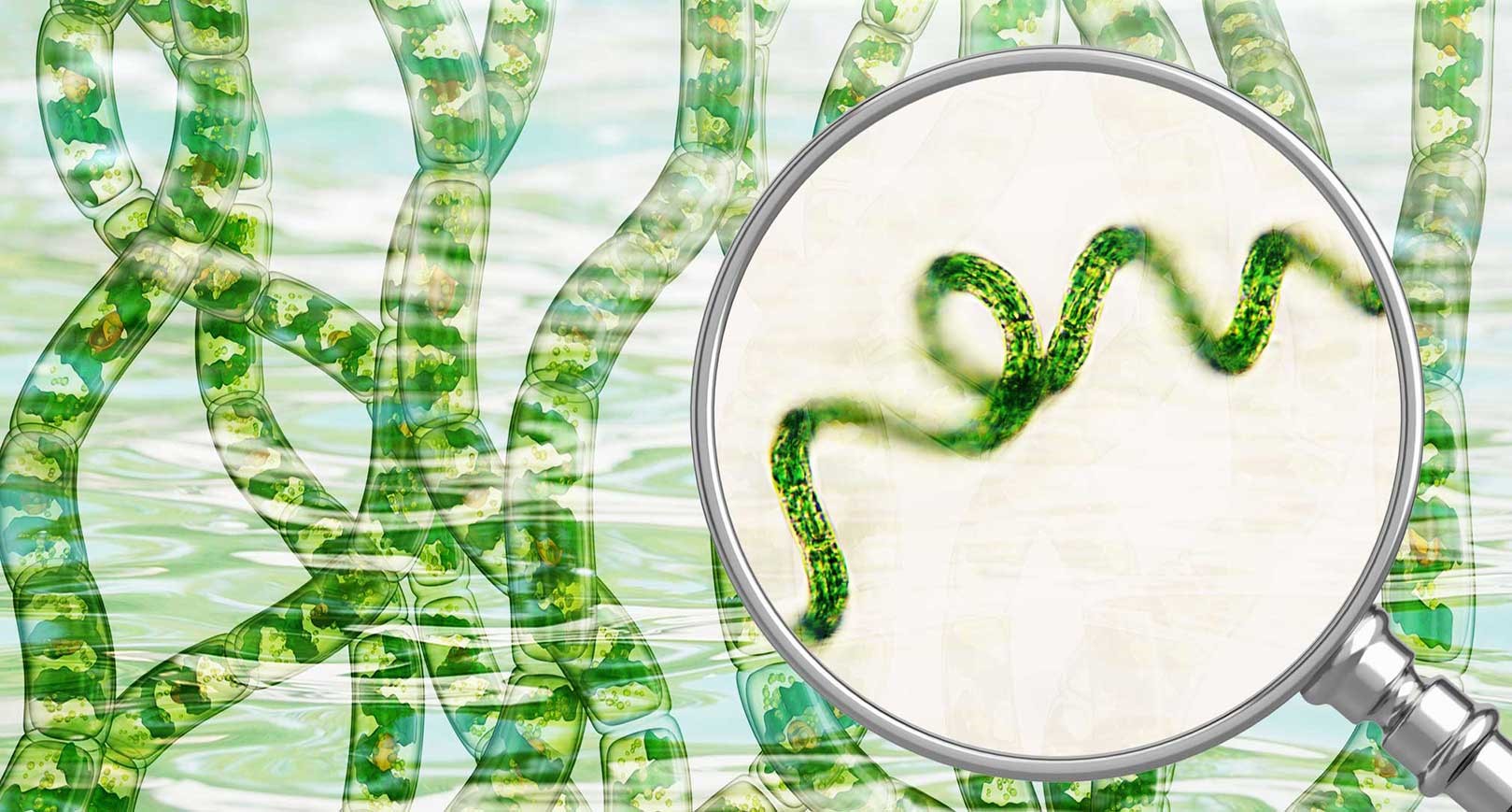
Cyanobacteria come in various shapes and sizes, ranging from isolated cells to complex colonies. Some species form filaments, called trichomes, which can be branched or unbranched. Trichomes are often surrounded by a protective sheath, which can vary in thickness and chemical composition.
The characteristic blue-green coloration of cyanobacteria is due to the presence of photosynthetic pigments, such as chlorophyll, Phycocyanin, and phycobiliproteins. These pigments enable cyanobacteria to capture the light energy required for photosynthesis. Under certain conditions, cyanobacteria can also exhibit reddish, brown, or even black hues.
Cyanobacteria primarily reproduce asexually through cell division. Some species can also form resistant spores, called akinetes, which allow them to survive in unfavorable environmental conditions. The growth of cyanobacteria depends on several factors, such as nutrient availability, temperature, and light.
As photosynthetic organisms, cyanobacteria are primary producers, meaning they form the base of the food chain in aquatic and terrestrial ecosystems. They thus provide a food source for many organisms, such as zooplankton, small fish, and invertebrates.
Some species of cyanobacteria have the ability to fix atmospheric nitrogen, a process that converts gaseous nitrogen into nitrogenous compounds assimilable by plants. This nitrogen fixation plays an essential role in nutrient recycling and soil fertility.
Cyanobacteria are also involved in the formation of complex biological structures, such as stromatolites and biofilms. Stromatolites are rock formations consisting of alternating layers of sediments and fossilized cyanobacteria colonies, while biofilms are microbial communities organized within an extracellular matrix.
Spirulina, scientifically named “Arthrospira platensis,” is a microalga that belongs to the cyanobacteria group. It has a microscopic spiral shape, hence its common name “spirulina.” It is often mistaken for a plant due to its high chlorophyll content, which gives it its green appearance, but it is actually a cyanobacterium capable of photosynthesis.
Spirulina is known for its exceptional nutritional properties. It is extremely rich in protein (up to 70% of its dry weight), which is much higher than most other plant-based protein sources. It contains all essential amino acids, making it a complete protein.
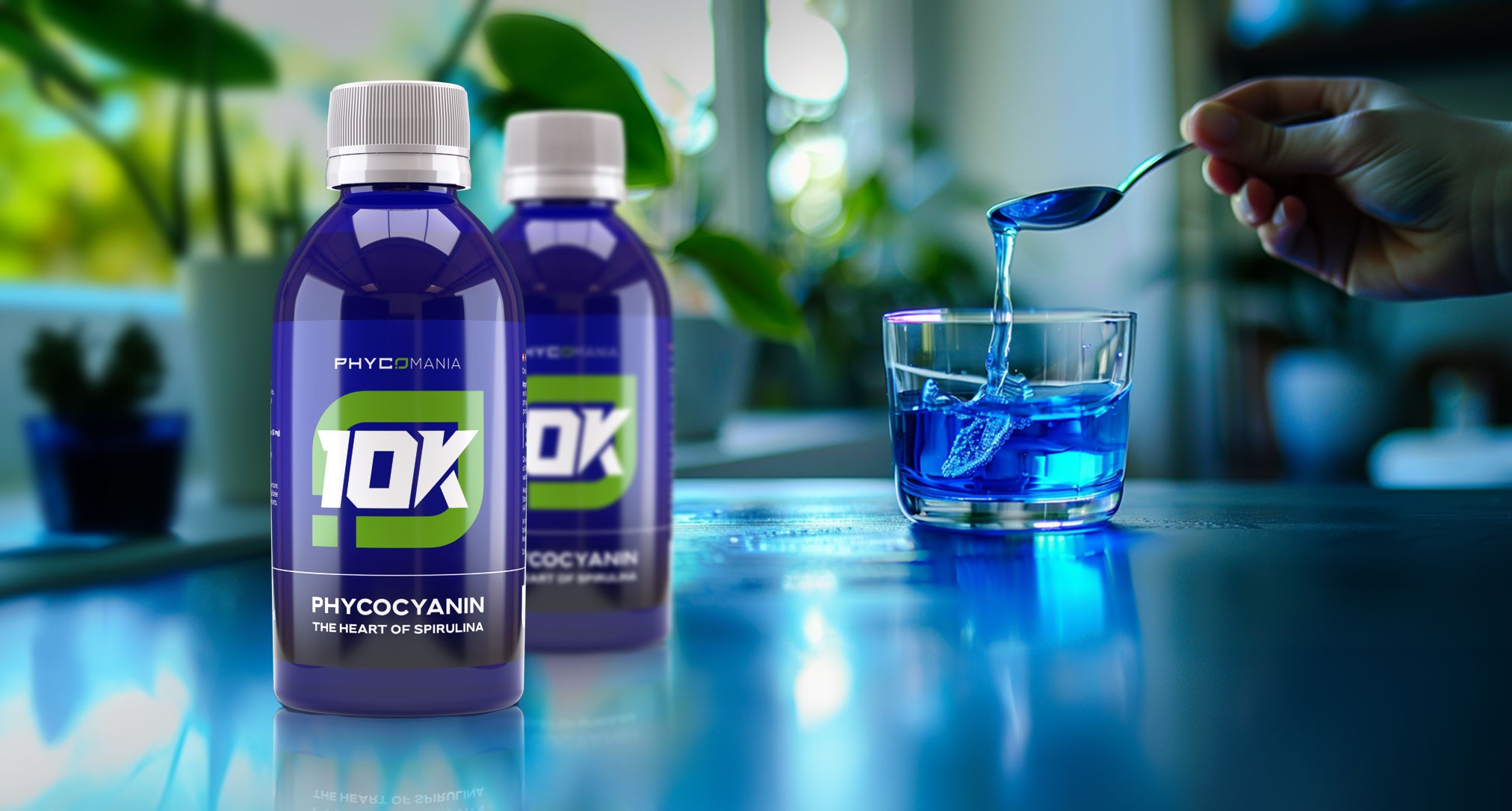
One of the main benefits of spirulina is its Phycocyanin content. Phycocyanin, which forms the basis of PHYCOMANIA's nutritional products, is indeed extracted from the cyanobacterium spirulina. Phycocyanin possesses truly exceptional therapeutic properties, notably its ability to neutralize free radicals to prevent oxidative stress and inflammation. PHYCOMANIA invites you to discover these benefits through two products: the Rhin Blue energizing drink and the 10 K food supplement.
Cyanobacteria are fascinating microorganisms that play an important role in the ecological balance of our planet. It is essential to better understand these organisms to leverage their beneficial properties, such as nitrogen fixation and oxygen production, and to develop sustainable management strategies for aquatic ecosystems, as well as to allow humans to benefit from the nutritional and therapeutic contributions that certain cyanobacteria, like spirulina, can offer.